Any organisation that has run a large data collection exercise knows the uncomfortable truth: the moment data starts arriving from the field, it needs checking, and checking it well is far harder than it sounds. Inconsistent entries, missing fields, implausible values, and the risk of the same individual being recorded more than once all require a structured quality-control response.
2M Corp built HoneyGuide, its own quality assurance platform, to close this gap. It was designed from the outset for data collection exercises of any size — from small, targeted surveys through to nationwide verification programmes — on the principle that data quality has to be managed while collection is happening, not discovered months later in a spreadsheet review.
Why Manual Review Doesn't Scale
Conventional statistical software is built for analysing data once it exists, not for continuously monitoring it as it arrives. And manual review — a person reading through submissions looking for problems — simply cannot keep pace with the volume a modern mobile data collection exercise generates, whether that is a few hundred survey responses a day or several thousand.
HoneyGuide addresses this by sitting between data collection and the point where information is treated as final. Every submission passes through an automated layer of checks as it arrives, well before a central team would otherwise have had time to inspect it manually.
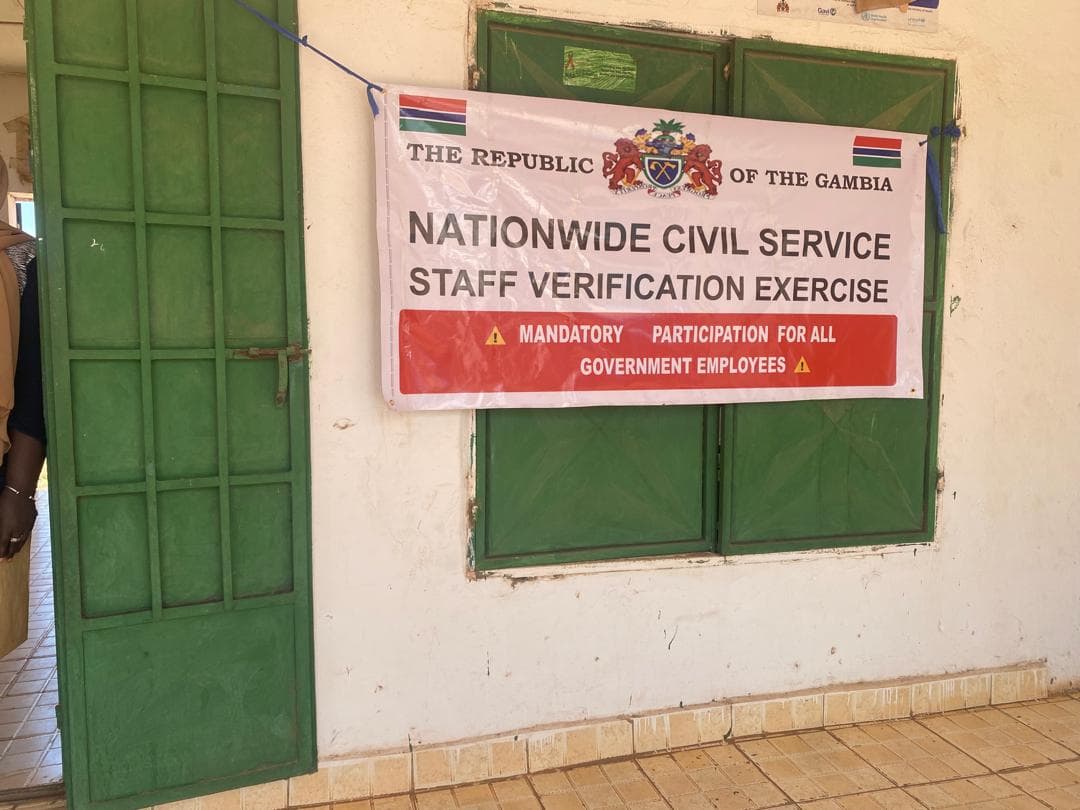
During the Ministry of Public Service's nationwide civil servant and pensioner verification exercise, delivered under the World Bank-supported Public Administration Modernisation Project, HoneyGuide's validation module reviewed 120,276 submitted records across the two principal tools used in the exercise: document check and verification. These submissions covered 49,459 civil servants and 8,667 pensioners progressing through different stages of the process.
The exercise was conducted by 18 field teams, each made up of one document checker and two verification officers. HoneyGuide applied 16 validation rules covering issues such as date discrepancies, inconsistencies between the document-check and verification stages, and other logical or administrative mismatches. Fewer than 20 per cent of records generated a validation flag, allowing the quality-assurance team to concentrate its attention on a manageable subset of submissions rather than repeatedly reviewing every record by hand.
Three Layers of Human Review, One Automated Layer Underneath
2M Corp pairs HoneyGuide with a tiered structure of human oversight because software alone cannot resolve every flagged case — some require judgement.
In the verification exercise, this took the form of three integrated tiers: paired verification officers providing mutual quality control by reviewing each other's work in the field; supervisors conducting daily reviews of collected data and following up on automated alerts; and a central team of data quality analysts monitoring quality metrics across every field team, investigating patterns rather than only individual cases.
HoneyGuide supports these tiers with the same underlying data. When an automated check flags a possible problem, it identifies the specific record and values involved so that supervisors and analysts can investigate the case directly. The system narrows the search space for human reviewers; it does not replace their judgement.
This mattered operationally. Feedback on flagged records was normally returned to field teams in less than 24 hours, while the relevant staff were still in the field and could correct a record, revisit an individual, or clarify an inconsistency. The value of automation was therefore not simply that it detected problems, but that it shortened the time between detection and corrective action.
Detecting What No Human Reviewer Could Reliably Catch by Eye
HoneyGuide was also used to support duplicate-risk detection during the exercise.
As photographs were captured during verification, HoneyGuide compared submitted images and surfaced records with sufficiently similar facial characteristics for additional review. The system did not determine that two records belonged to the same person, and a similarity flag was not treated as evidence of fraud. It was an alert for human investigation.
Across the exercise, fewer than 50 potential duplicate records were flagged for review. Users examined the underlying records and photographs before deciding whether any further action was required.
This distinction is important. Duplicate-risk detection works best as a way of directing human attention to cases that would be difficult to identify systematically by eye across tens of thousands of photographs. The software reduces the search problem; the final decision remains with the reviewer.
The experience also reinforced a broader lesson: automated checks are most effective when they complement field observation, documentary review, and human judgement. No validation system can anticipate every operational issue that may arise during a large verification exercise, so the purpose of automation is to help reviewers focus attention where it is most useful rather than to replace the wider quality-assurance process.
Automation Works Best When It Focuses Human Attention
The central lesson from the verification exercise is not that software can replace a quality-assurance team. It is that automation can make a small team much more effective.
Across more than 120,000 submitted records, the role of HoneyGuide was to continuously apply the same validation logic, surface unusual records, and return issues to the field quickly. Human reviewers could then spend their time understanding the cases that actually required interpretation.
That approach applies beyond national verification programmes. Whether an organisation is collecting a few hundred survey responses or managing tens of thousands of administrative records, the same principle holds: data quality improves when problems are detected while they can still be corrected, and when automated systems are used to focus human judgement rather than substitute for it.